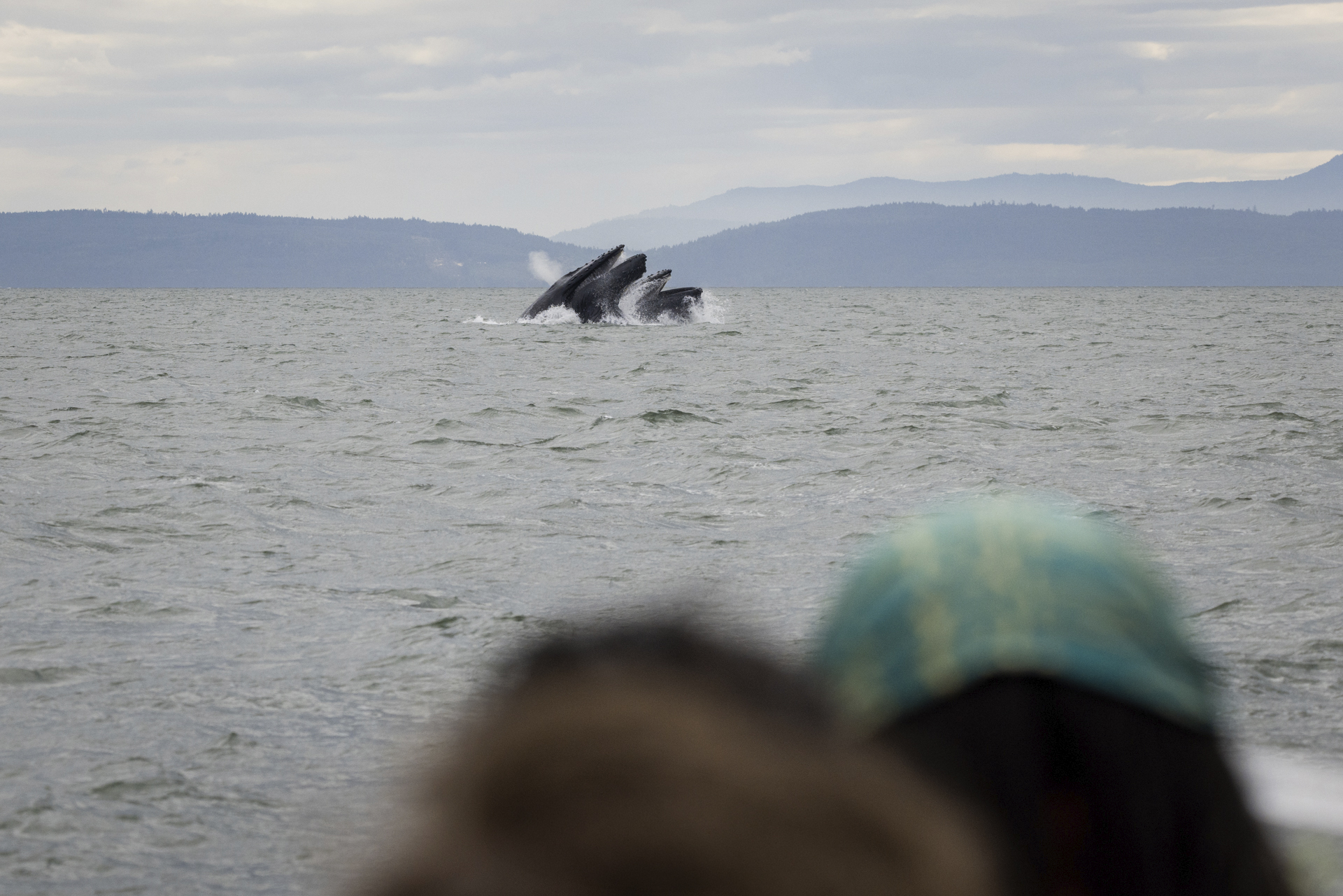
There are some moments on the Salish Sea that happen so quickly you barely have time to process what you’ve just seen.
The water erupts. An enormous humpback whale surges towards the surface, mouth open, sending water in every direction.
And sometimes, as we were lucky enough to witness recently, more than one whale appears at once.
It’s called lunge feeding, and it’s one of the most dramatic feeding behaviours we can witness from humpback whales in the Salish Sea.
So, what exactly is happening?
What Is Lunge Feeding?
Humpback whales are baleen whales, which means that instead of teeth, they have plates of baleen hanging from their upper jaw.
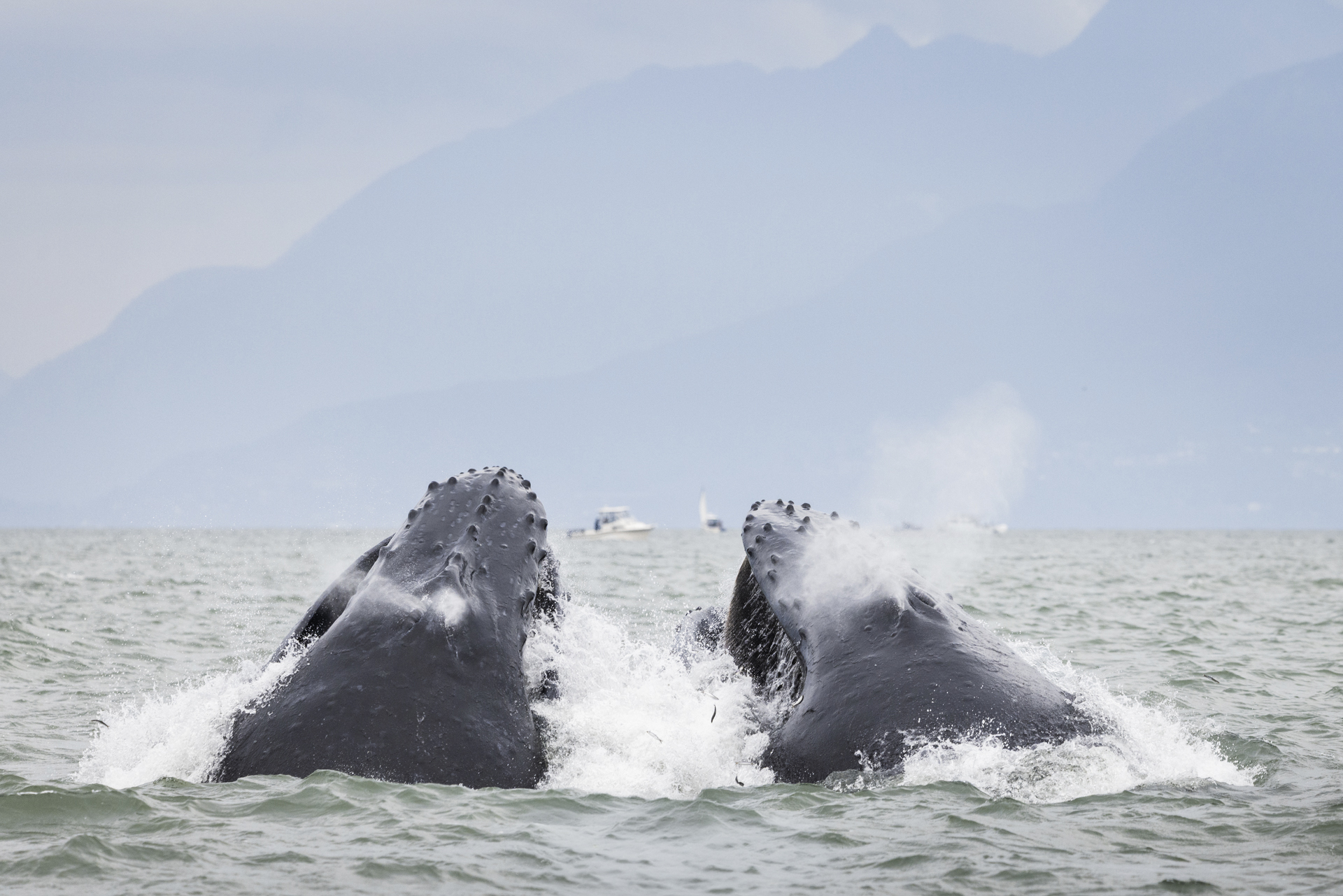
When lunge feeding, a humpback accelerates towards a concentration of prey and opens its enormous mouth, engulfing both prey and a huge volume of seawater.
If you look closely at photographs of a feeding humpback, you may notice the long grooves running along the underside of its throat. These are known as ventral pleats or throat grooves, and they allow the throat region to expand dramatically as the whale takes in water and prey.
Once the whale has engulfed its mouthful, the water is pushed back out through its baleen. The baleen acts as a filter, allowing the whale to retain its food before swallowing it.
And despite the enormous scale of the animal, much of the prey humpbacks are targeting is comparatively tiny.
In the Salish Sea, humpbacks feed on small schooling fish such as herring and other prey including krill.
Why Do Humpbacks Lunge Feed?
For a humpback whale, summer in northern feeding grounds is important.
Humpbacks undertake long seasonal migrations between feeding and breeding areas. While they are here in productive northern waters, feeding allows them to build the energy reserves that help sustain them through other parts of their annual cycle.
That makes efficient feeding incredibly important.
Lunge feeding allows a humpback to engulf a dense concentration of prey in a single enormous mouthful.
But finding that prey is another matter.
Small fish can move quickly and form schools, so humpbacks use a variety of feeding strategies depending on the prey, conditions and circumstances.
That's one of the fascinating things about spending time watching whales: feeding doesn't always look the same.
When the Birds Start Gathering, Pay Attention
Whales aren't the only animals interested in finding food.
One of our recent encounters provided a beautiful example of just how connected the Salish Sea ecosystem can be.
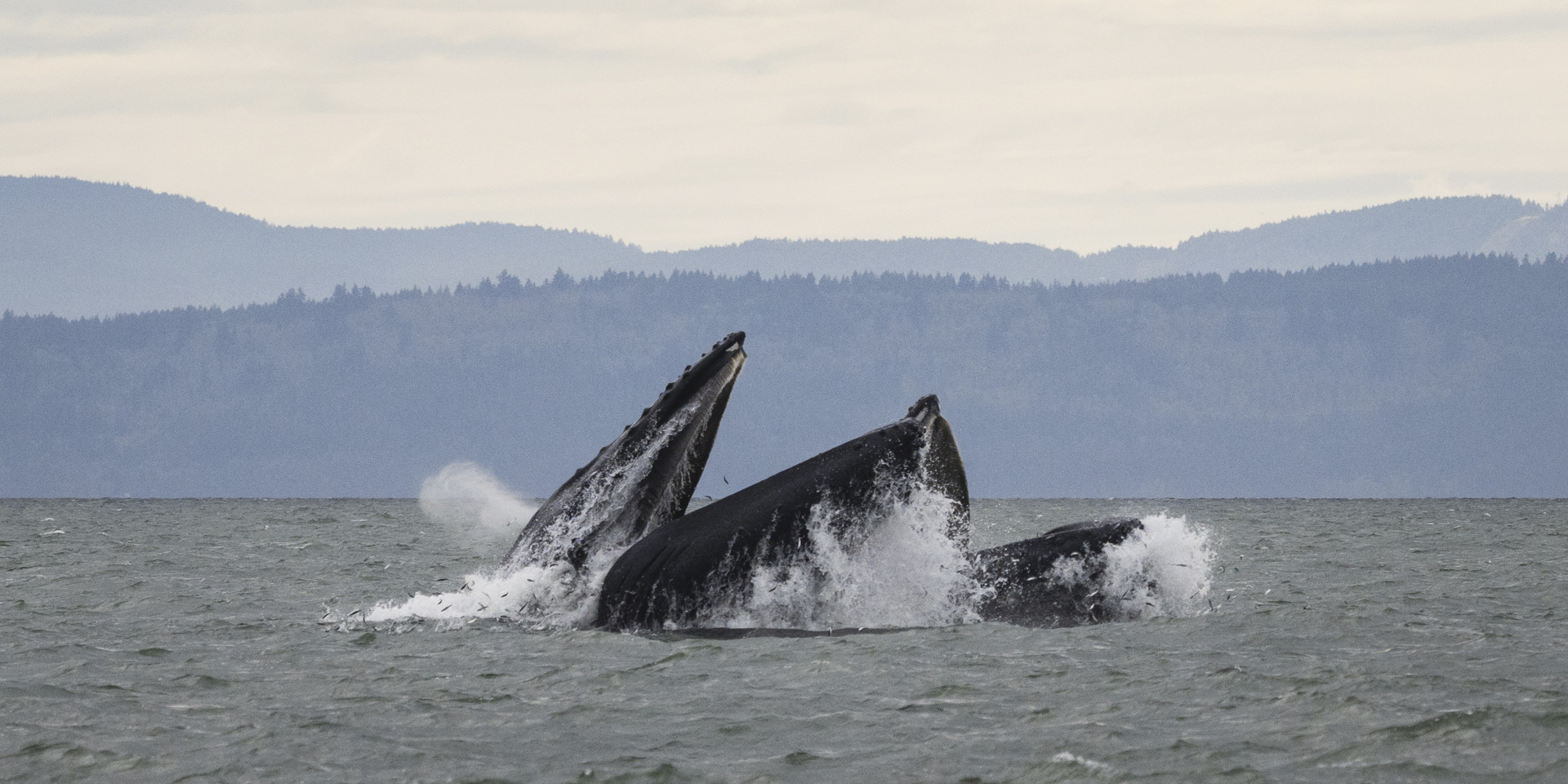
Before and around the feeding activity, seabirds could be seen gathering over the water.
Why?
Whales and seabirds can be attracted to the same concentrations of prey.
For whale watchers, activity at the surface can therefore provide clues about what might be happening beneath it. Our captains and naturalists aren't simply looking for a giant whale sitting conspicuously on the horizon, they're constantly scanning the environment for signs of life.
A blow. A dorsal fin. An unusual disturbance on the surface. And sometimes, a gathering of birds.
It's one of the reasons searching for whales can be almost as interesting as finding them.
What Does Lunge Feeding Look Like From a Whale Watching Boat?
Fast.
Really fast.
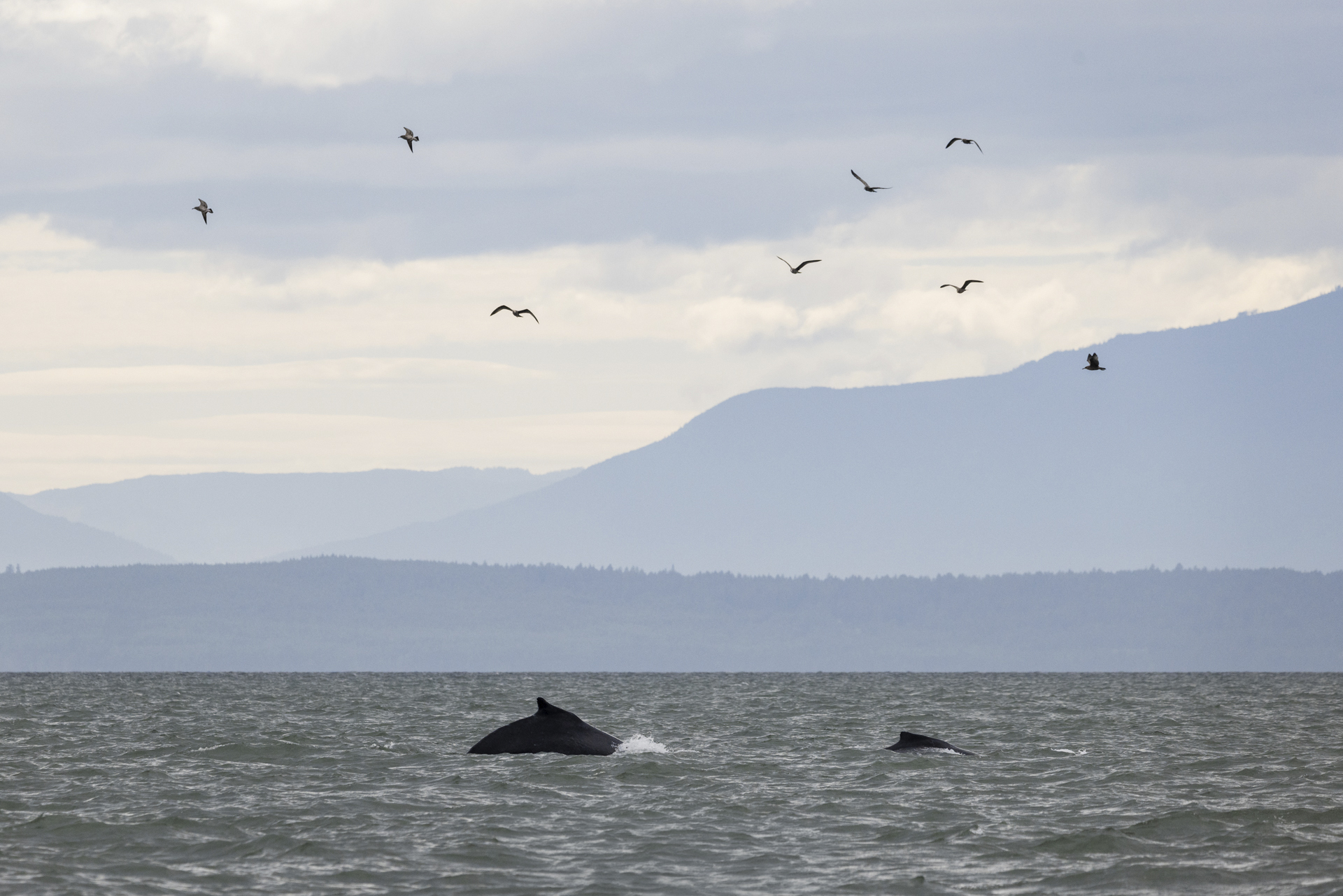
One moment you're scanning the water. The next, an enormous head is breaking through the surface amid white water and spray.
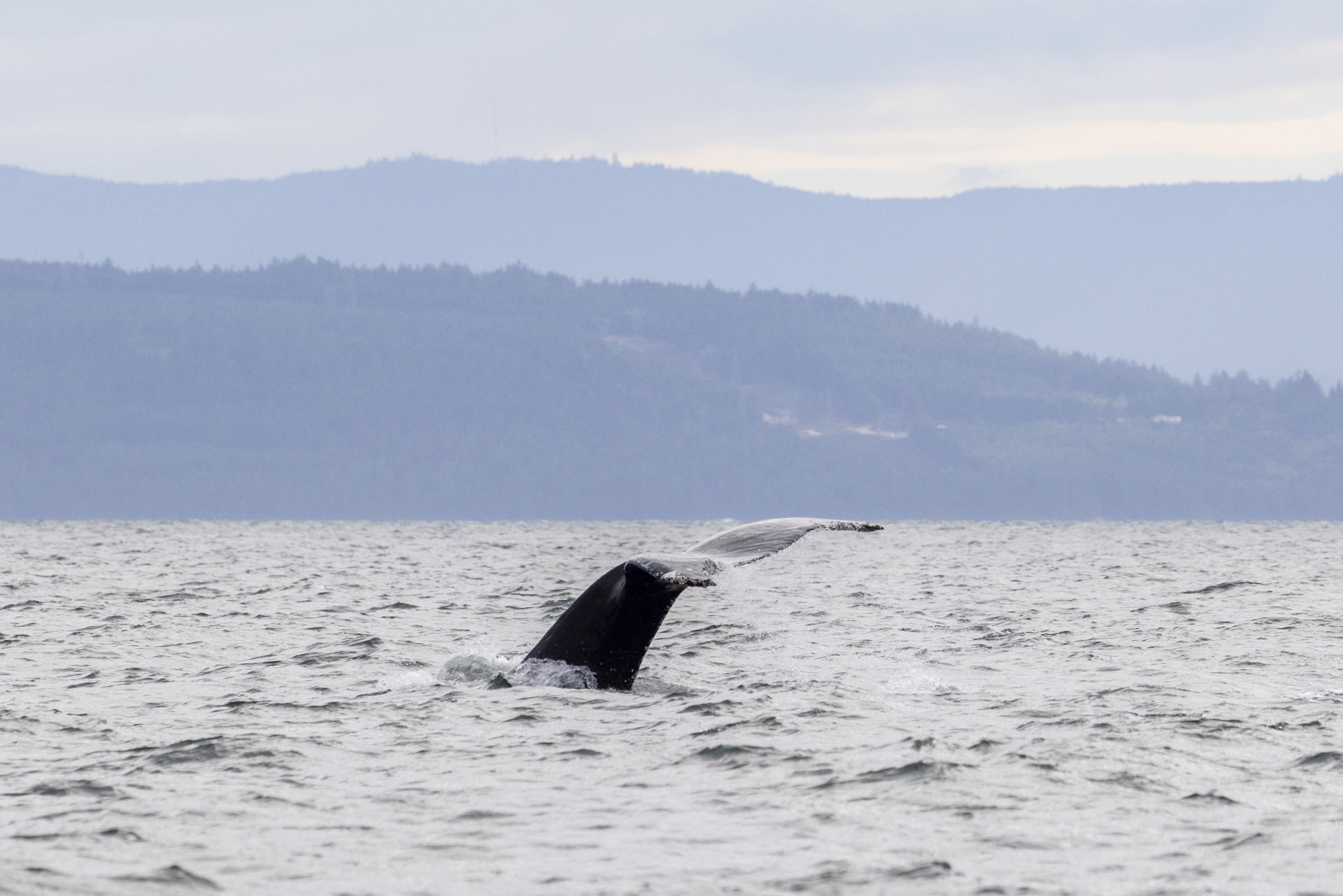
When several humpbacks are feeding in the same area, there's even more to watch. Our recent photographs captured whales emerging together during a feeding sequence, creating some extraordinary scenes against the mountains of the Salish Sea.
But photographs only capture a fraction of the experience.
There's the anticipation while you're watching the water. The call when somebody spots activity. The sudden eruption at the surface. And that split second when everyone realizes what's happening.
Then the whale disappears beneath the water again.
It's a good reminder that some of the most memorable wildlife encounters aren't necessarily the longest.
Sometimes they happen in seconds.
Can You See Lunge Feeding on a Whale Watching Tour?
It's possible — but it is never something we can promise.
And that's important.
The humpbacks we encounter are wild animals in a wild ecosystem. We don't control where they'll be, which individuals we'll encounter or what they'll be doing when we find them.
One trip might involve watching a humpback travelling steadily through the Salish Sea. On another, we might see repeated deep dives. Sometimes we encounter feeding activity. Occasionally there are those extraordinary moments when a whale suddenly launches towards the surface with its mouth open.
Every encounter tells us something different about how these animals use the Salish Sea.
Responsible whale watching means observing what the whales choose to do while giving them the space required under marine mammal viewing regulations, rather than seeking a particular behaviour from them.
That unpredictability is also what makes each trip its own adventure.
There’s Still Time to Explore the Salish Sea This Season
These photographs show one remarkable encounter.
They don't show what will happen tomorrow.
And we think that's the exciting part.
Every time we leave Steveston, we're heading into a living ecosystem. We search, watch, listen and see what the Salish Sea gives us that day.
What will happen on your trip?
Our 2026 whale watching season continues until October 31, so there is still time to head onto the water with us before the season comes to an end. Come prepared to watch the horizon, ask plenty of questions and discover what’s out there.
Book your whale watching adventure with Seabreeze Adventures and join us on the Salish Sea from Steveston, BC.