Whales often give us subtle clues that they're in the area. By spotting these signs from a respectful distance, we can observe natural behaviour while minimizing disturbance — an approach that’s better for both whales and people. Below, we’ll break down how humpback whales and orcas are typically spotted on the Salish Sea, and why distance matters every step of the way.
How to Spot a Humpback Whale 🐋
Humpback whales are often easier to detect than people expect — if you know what to look for.
The first sign is usually the blow. A humpback’s exhale is tall, bushy, and unmistakable, rising straight up into the air. Once you spot the blow, watch closely for the whale’s long, arched back as it surfaces to breathe.
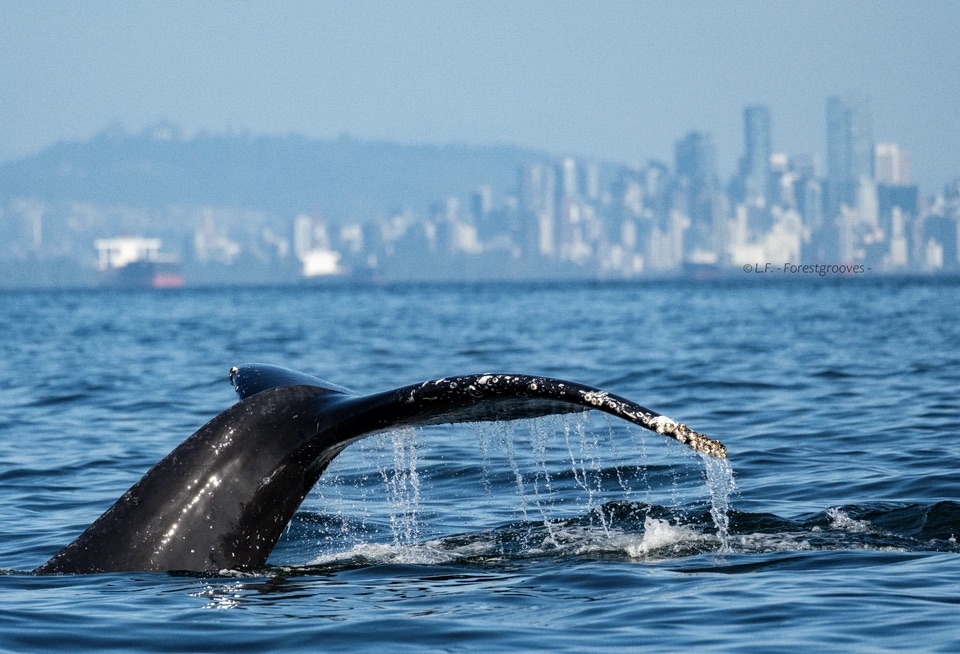
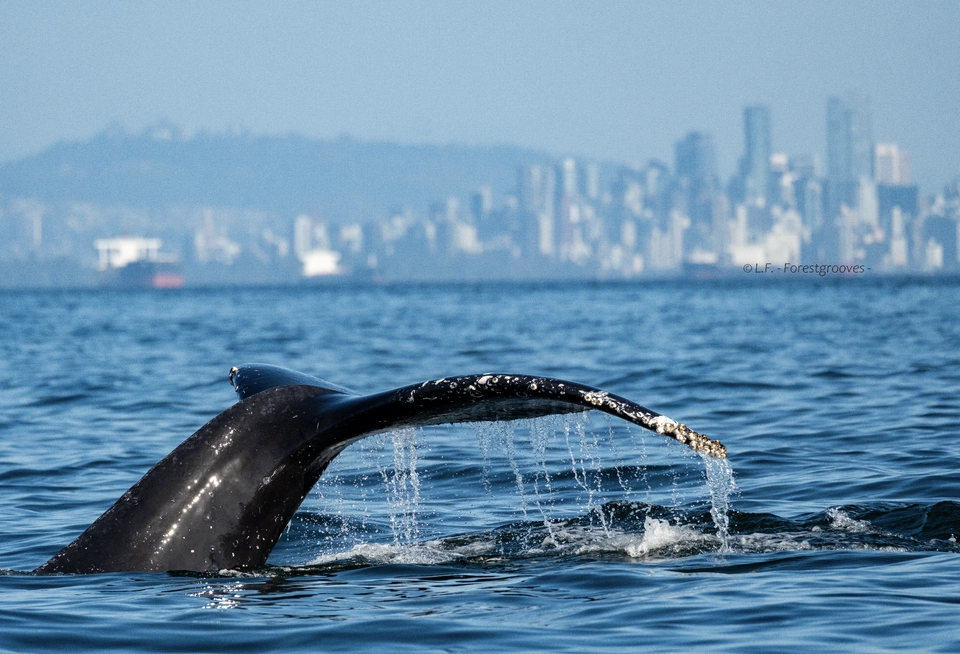
Many humpbacks lift their flukes (tail) high out of the water before a longer dive. While not every dive ends with a fluke-up, it’s a common behaviour and one of the most recognizable sights on the water. Each humpback’s fluke has a unique pattern of markings and scars, which researchers use to identify individuals across the Pacific.
On calm, quiet days, you may even hear a humpback’s breath carry across the water before you clearly see the whale. Moments like this are a reminder of why slowing down, reducing noise, and maintaining distance are so important. In Canadian waters, vessels must keep at least 100 metres away from humpback whales.
By observing patiently and from afar, we protect these animals while still learning from their movements and behaviour.
How to Spot Orcas from a Responsible Distance 🖤🤍
Orcas tend to announce themselves in a different way.
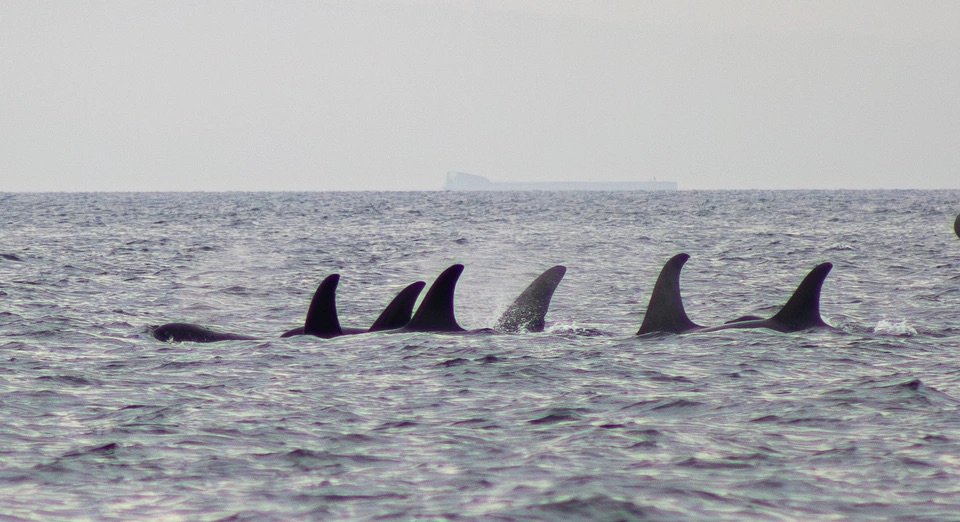
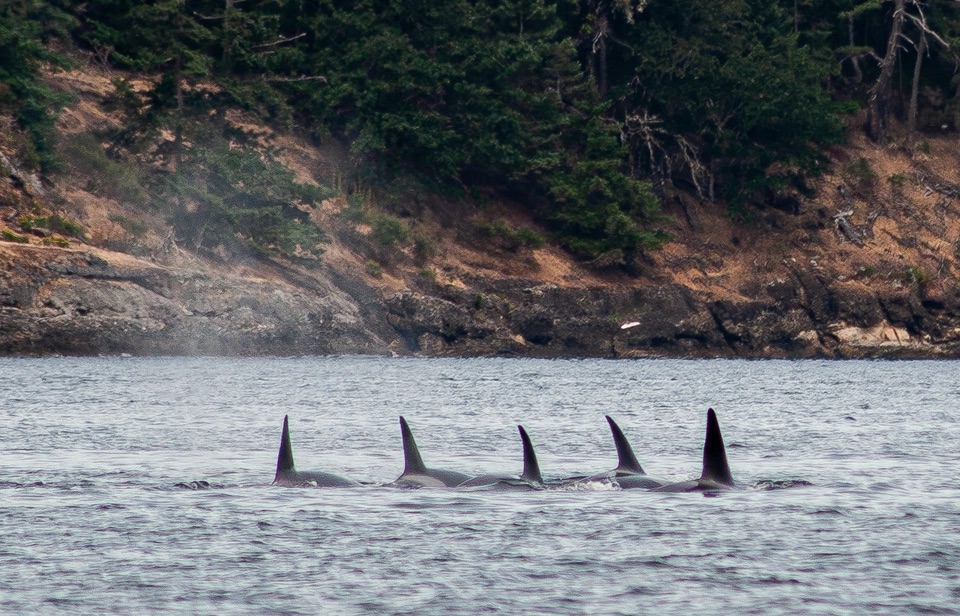
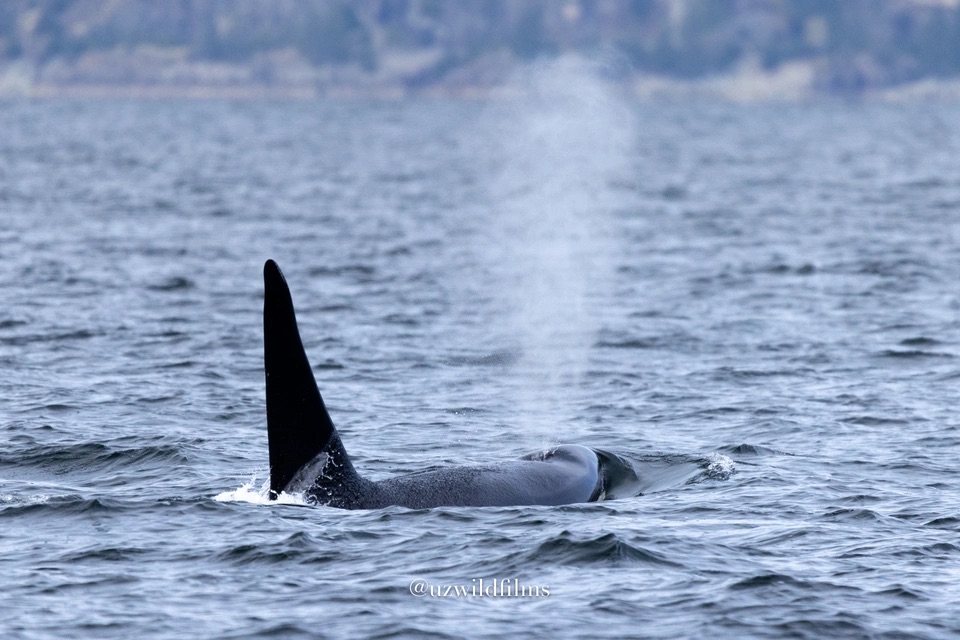
Rather than a tall blow, the most obvious clue is their distinctive dorsal fin. Male orcas have tall, triangular fins that can reach up to six feet high, making them visible even from far away. Female and juvenile fins are shorter and more curved, but still striking once you learn to recognize them.
Orcas are social animals and usually travel in groups known as pods. If you spot one dorsal fin, chances are there are others nearby, surfacing in a steady rhythm as they move together through the water.
Because orcas rely heavily on sound to communicate and hunt, reducing vessel noise and keeping distance is especially important. Current regulations require boats to stay at least 200 metres away from orcas. Giving them space allows them to travel, socialize, and feed naturally without interference.
Why Distance Matters
Responsible whale watching isn’t about getting closer — it’s about observing carefully. Distance helps reduce stress, minimizes disruption to natural behaviour, and ensures that whales can continue to thrive in busy coastal waters like the Salish Sea.
By watching from a respectful distance, we often gain a better understanding of whale behaviour, group dynamics, and movement patterns. These quieter, slower moments on the water are often the most meaningful.
As visitors in a wild, living ecosystem, our role is simple:
slow down, keep space, and observe with care.
That’s how we protect whales — and why every responsible sighting matters.