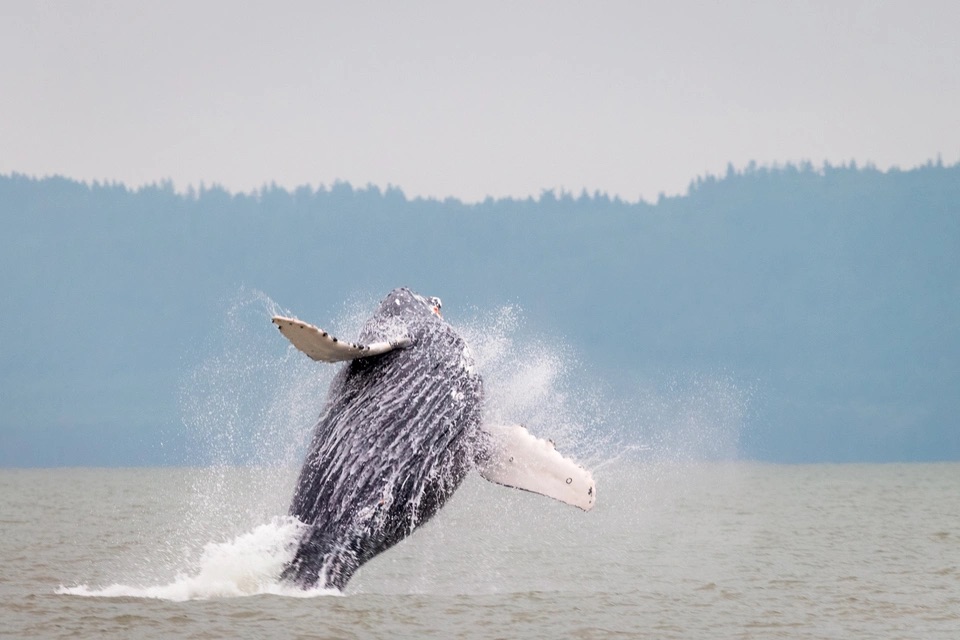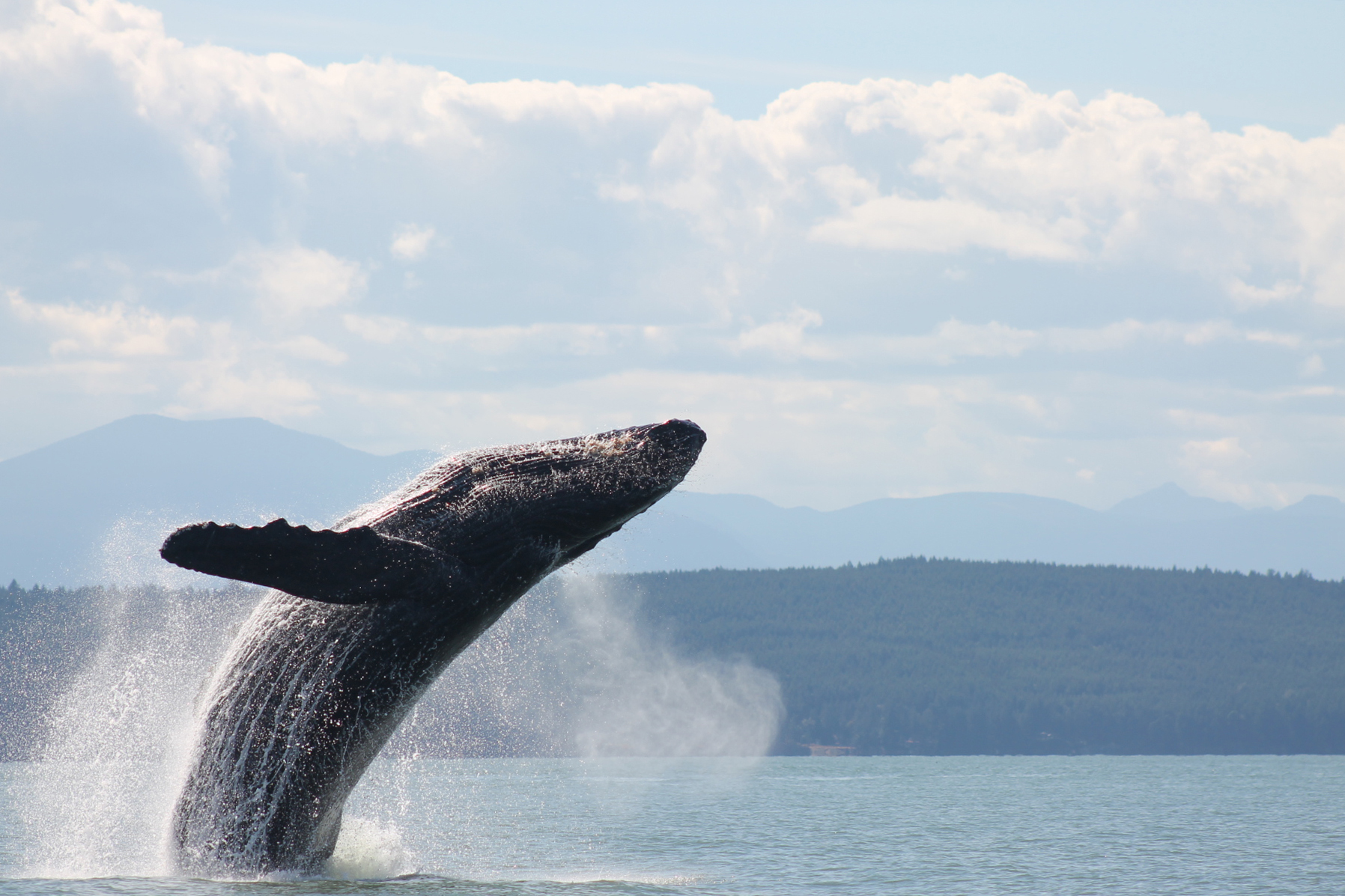
Humpback whales are one of the species you’re most likely to see on our tours. These whales can weigh up to a whopping 40 tonnes—so what are they eating to sustain themselves?
In the Salish Sea, krill comprise 90% of a humpback whale's diet. Krill are tiny, shrimp-like crustaceans, measuring only 2-6 centimetres in length. For the bus-sized humpback whales to sustain themselves, they need to eat approximately 1.5-2 tonnes of krill every day. That sounds like a massive number, but that’s possibly a conservative estimate, as a 2021 study on baleen whales in the southern hemisphere suggested they could be eating as much as 6 tonnes of krill every day!
Springtime humpback whales in the Salish Sea are hungry after a long migration from warm, tropical waters. This is especially true for humpback mothers, as there is almost no food in the warm-water breeding grounds where they give birth. Some quick stats can illustrate the importance of the Salish Sea as a place for these humpback whales to refuel:
- Humpback calves need 6 - 8 times more energy a day than adults
- Nursing mothers lose approximately 100 kgs a day
- Humpback mothers lose ~20% of their body volume in the first 60 days of lactation in the breeding grounds
- Calf body volume increased ~395% in their first 176 days of life
- Calves reach 75% of their adult length in their first year, highlighting the extreme energy demands required from both them and their mothers
Research like this emphasizes the importance of habitat protection for humpback whales—the Salish Sea is vital for mothers to refuel while they nurse their calves through the first year of their life. This is why we always abide by distance and speed regulations on our ecotours. It’s important to give these whale families the space and peace they need after a long winter migration!
Sources:
Savoca, M.S., Czapanskiy, M.F., Kahane-Rapport, S.R. et al. Baleen whale prey consumption based on high-resolution foraging measurements. Nature 599, 85–90 (2021). https://doi.org/10.1038/s41586-021-03991-5
van Aswegen M, Szabo A, Currie JJ, et al. (2025) Maternal investment, body condition and calf growth in humpback whales. The Journal of physiology 603(2). England: Wiley Subscription Services, Inc: 551–578.
van Aswegen M, Szabo A, Currie JJ, et al. (2025) Age-specific body length, mass and energetic cost of growth in humpback whales. Marine ecology. Progress series (Halstenbek) 770. Oldendorf: Inter-Research Science Center: 171–194.