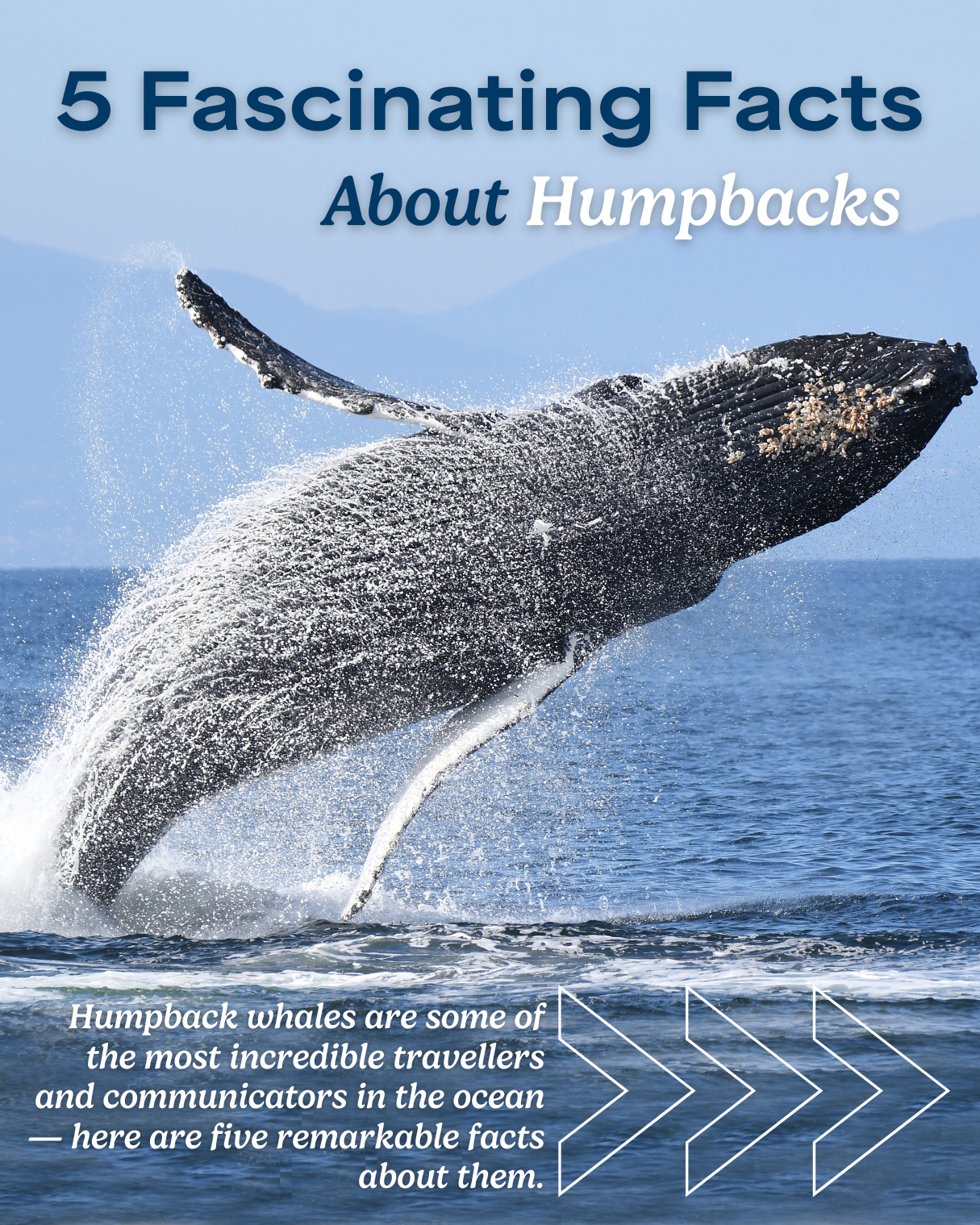
Discover what makes these giants of the Salish Sea so extraordinary! Humpback whales are some of the most captivating animals on Earth — enormous, graceful, curious, and full of behaviours that scientists are still working to understand. Every season, guests aboard our tours are amazed not just by the sight of a humpback surfacing, but by the incredible stories behind how these whales live, communicate, migrate, and feed. Here are five fascinating facts that might change the way you see these gentle giants.
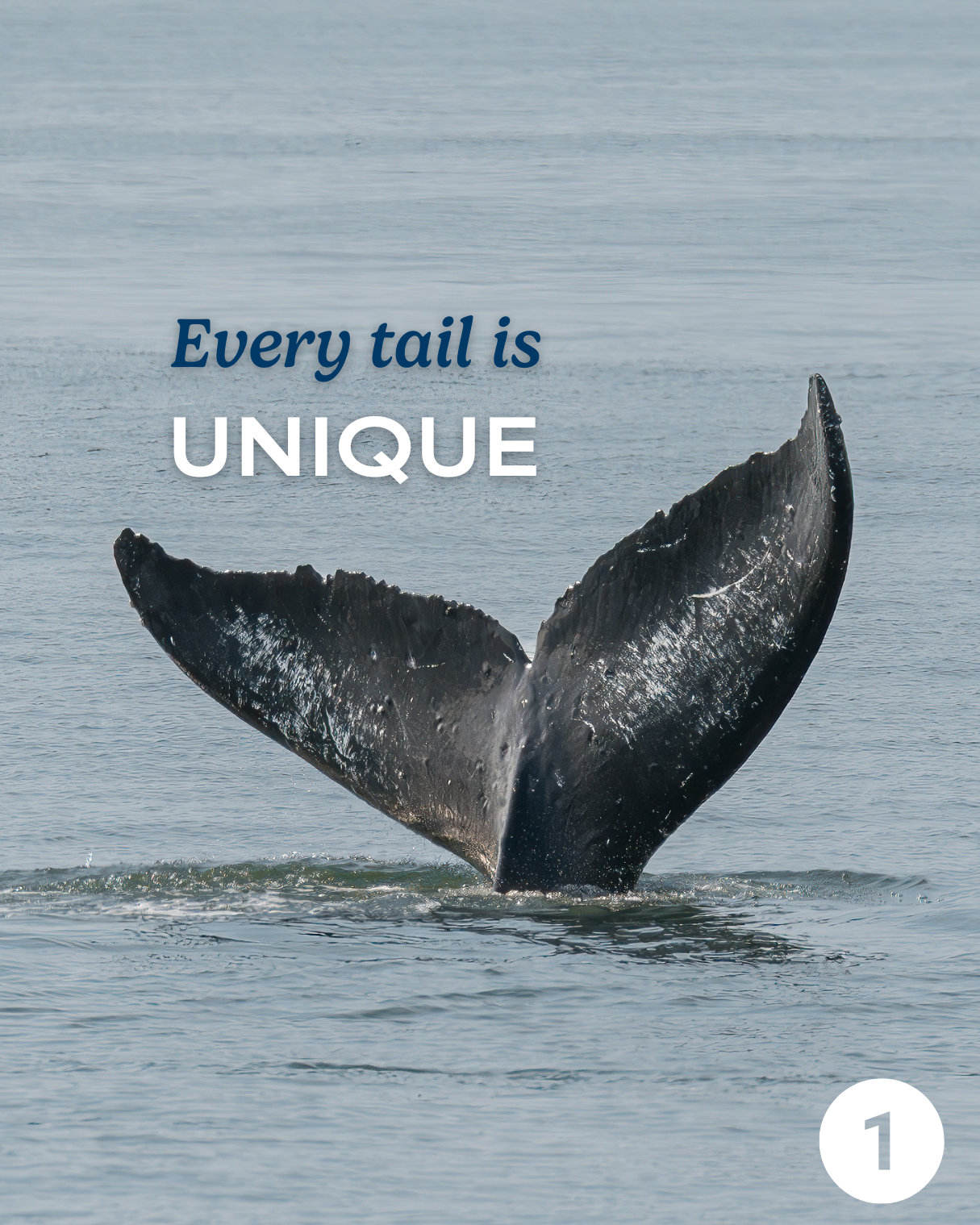
1️⃣ Every tail is unique — like a fingerprint
If you’ve ever seen a humpback lift its massive tail fluke before a deep dive, you’ve witnessed something truly one-of-a-kind. Each whale has its own unique pattern of markings, pigmentation, and scars on its tail.
Researchers use these fluke patterns the same way humans use fingerprints — to identify and track individual whales across vast ocean distances. In the North Pacific, this work has helped scientists map migration routes, estimate population numbers, and even learn which whales return to the Salish Sea year after year.
It means that every fluke you see tells a story.
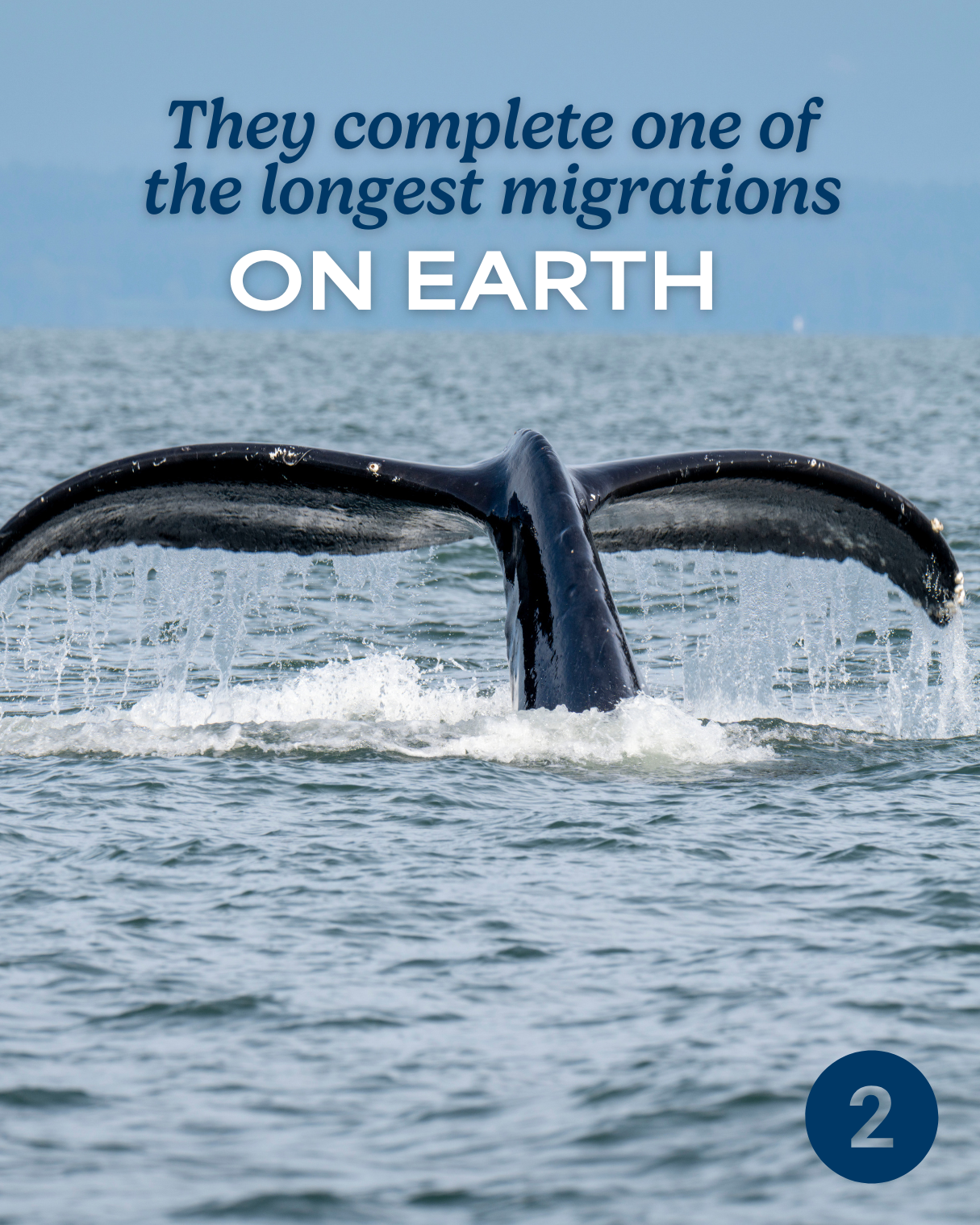
2️⃣ They complete one of the longest migrations on Earth
Humpbacks are world-class travellers. North Pacific populations make one of the longest migrations of any mammal, journeying thousands of kilometres between their summer feeding grounds in British Columbia and Alaska and their winter breeding areas in Hawaii, Mexico, and Central America.
They spend their summer and fall in the Salish Sea feeding and building up energy reserves, fuel they’ll need for the long, food-limited migration south. Some whales complete round-trip migrations exceeding 10,000 km every year.
Watching a humpback in BC is truly watching part of an epic ocean journey.
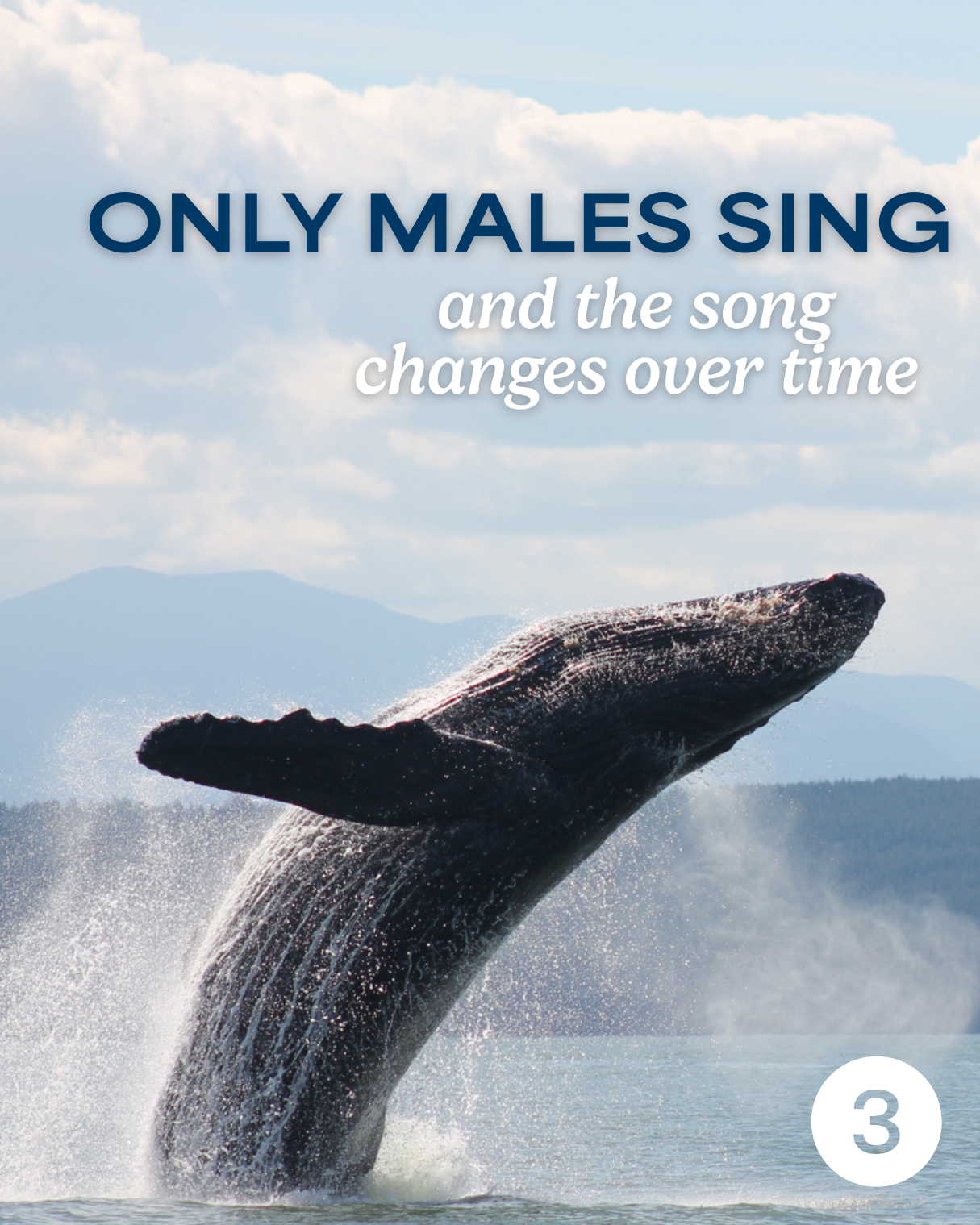
3️⃣ Only males sing — and their songs evolve
Humpback songs are one of the ocean’s greatest mysteries. Only male humpbacks sing, producing long, complex vocal displays that can last for minutes or even hours.
Each population shares a version of the same “song,” and remarkably, that song changes gradually over time, a kind of cultural evolution passed between whales.
Scientists still don’t know exactly why males sing, but possibilities include:
- attracting mates
- communicating dominance
- coordinating in social interactions
What’s clear is this: humpback songs are among the most sophisticated vocal behaviours in the animal kingdom.
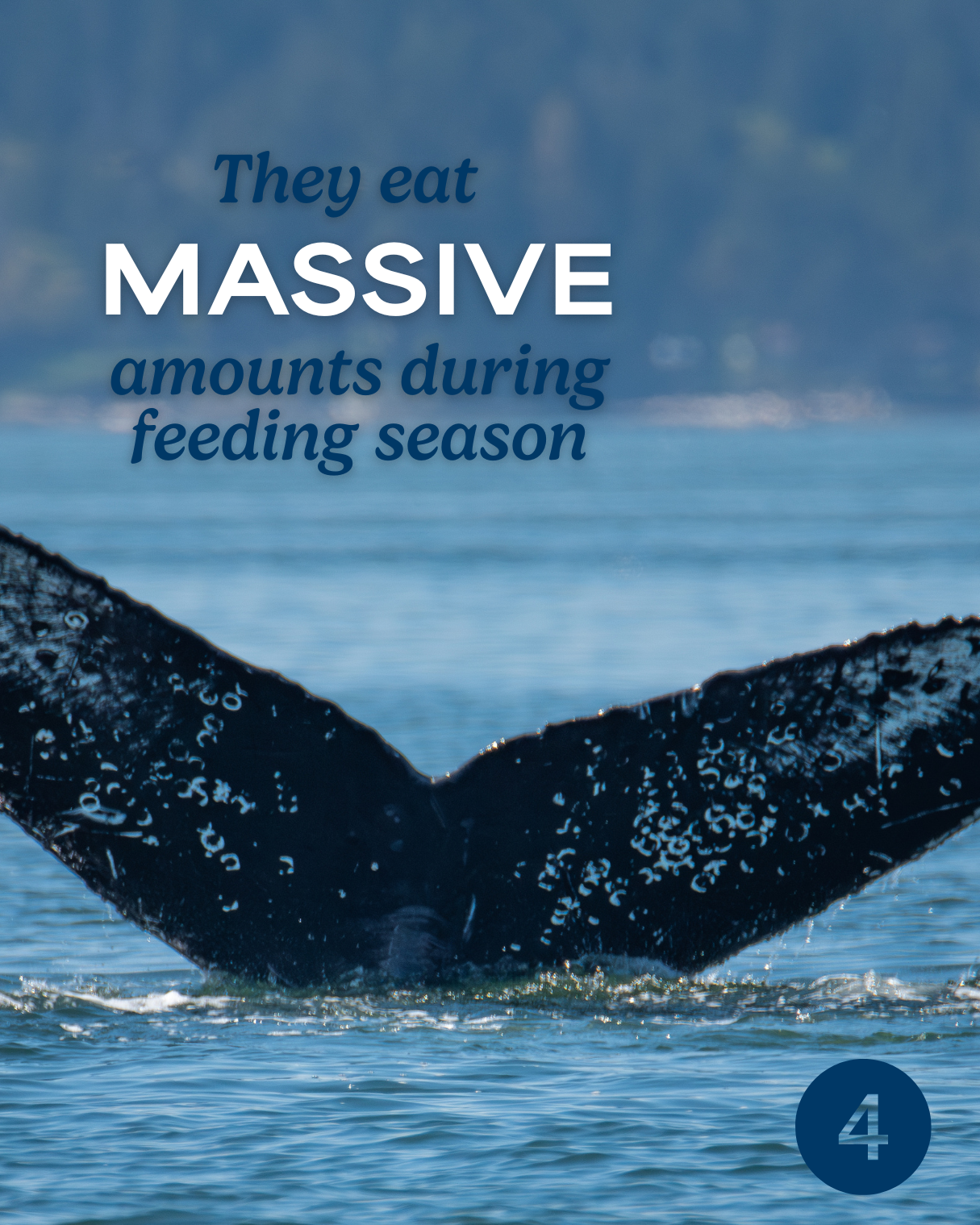
4️⃣ They eat enormous amounts during feeding season
To prepare for migration and the fasting period of the winter breeding season, humpbacks must eat — a lot.
During the summer and fall feeding months, they consume hundreds to thousands of kilograms of fish and krill per day. Using specialized feeding techniques like bubble-net feeding, lunge feeding, and cooperative hunting, they take advantage of the nutrient-rich waters off BC and Alaska.
Their entire year revolves around this intense seasonal feast.
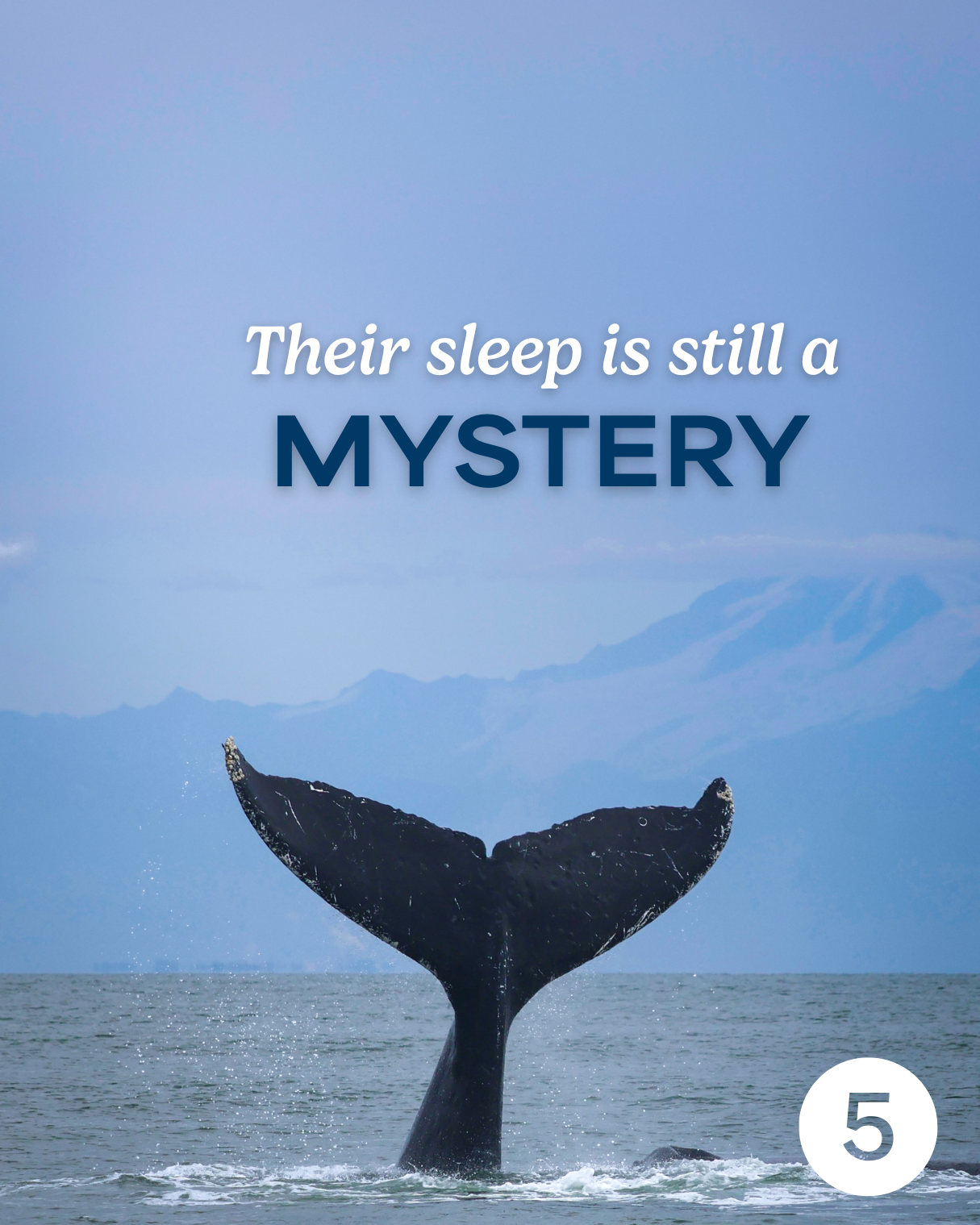
5️⃣ Their sleep is still a mystery
While many aspects of humpback behaviour are well-studied, sleep remains one of the big unknowns. Scientists believe humpbacks engage in a form of unihemispheric rest — resting one half of the brain at a time — similar to dolphins and some other marine mammals.
They likely rest by drifting near the surface, rising periodically to breathe. But because they must remain conscious enough to surface for air, they can never fully “switch off.”
Humpback sleep is still an emerging area of research, reminding us how much we have yet to learn.
💙 Which fact surprised you the most?
Every encounter with a humpback is a chance to witness something extraordinary — a moment in the life of a traveller, a hunter, a singer, and a giant that connects entire ocean basins through its migrations.
If you’re curious to learn more or hoping to see these incredible whales for yourself, join us on the water during the 2026 whale watching season!