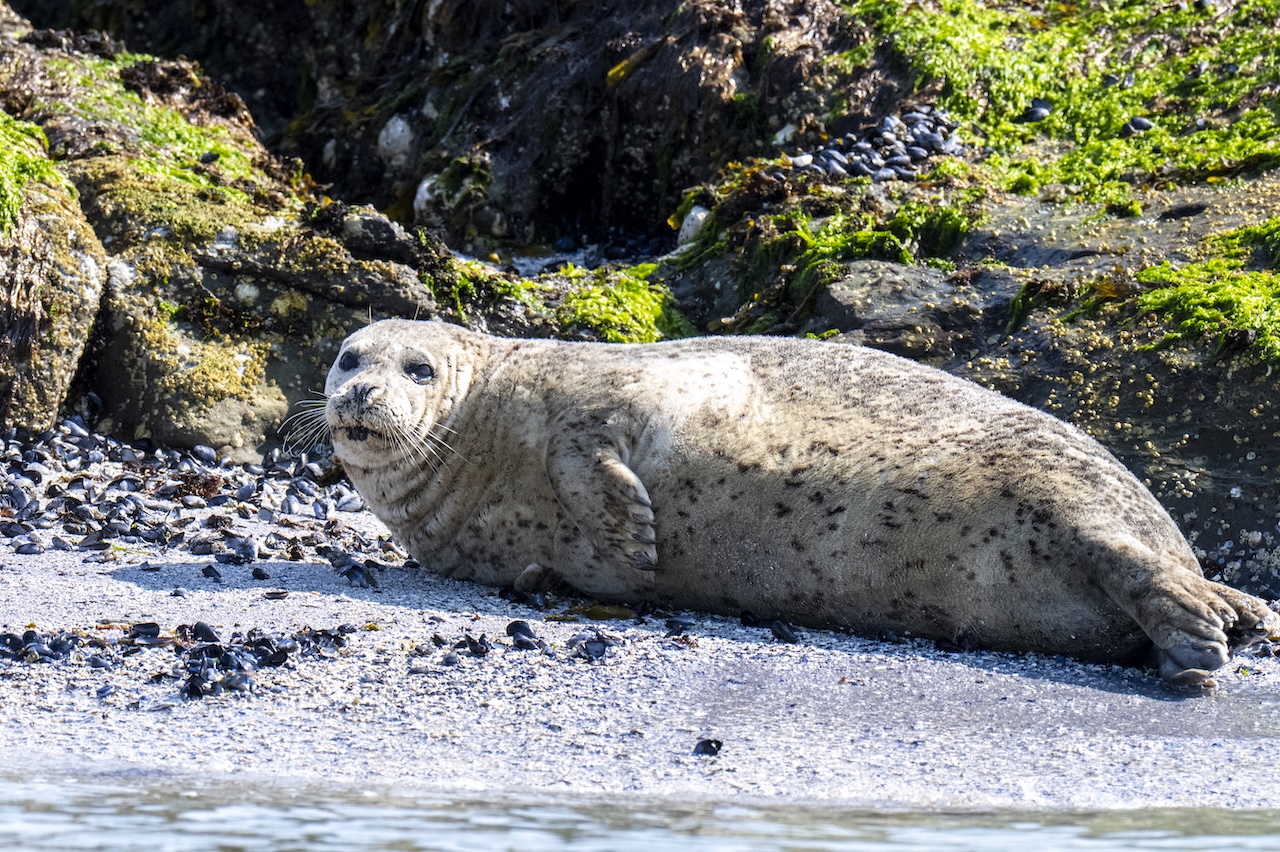
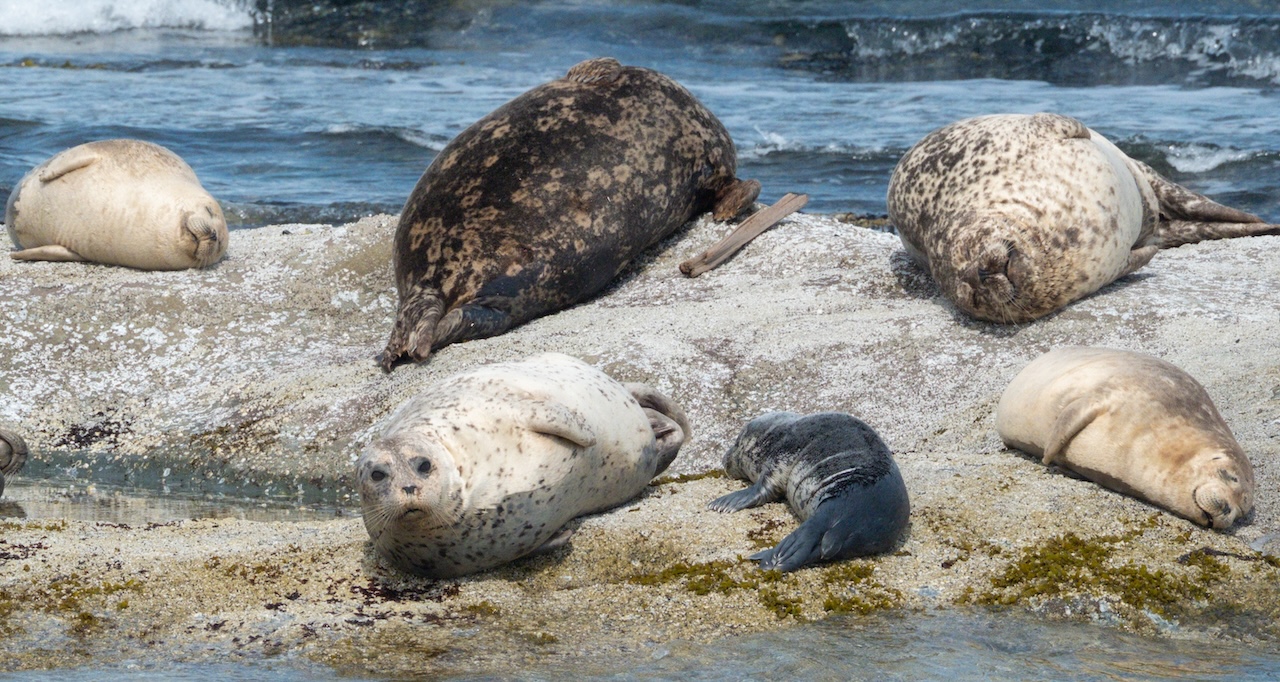
Some of the most common—and cutest—Salish Sea wildlife you’ll see on our tours are harbour seals. Harbour seals are part of the pinniped family, and it’s common to see them hauled out on rocks or poking their heads up above the surface of the water near shore. Here are five fun facts about them!
1. They can tell the difference between local resident killer whales and transient killer whale calls.
For any species, finding ways to escape predators is a top priority, and harbour seals have found a clever way to avoid transient/Bigg’s killer whales—by eavesdropping. One study found that harbour seals ignored the calls of local resident fish-eating killer whales, but when the scientists played the calls from mammal-eating Bigg’s killer whales, the harbour seals would panic and flee!
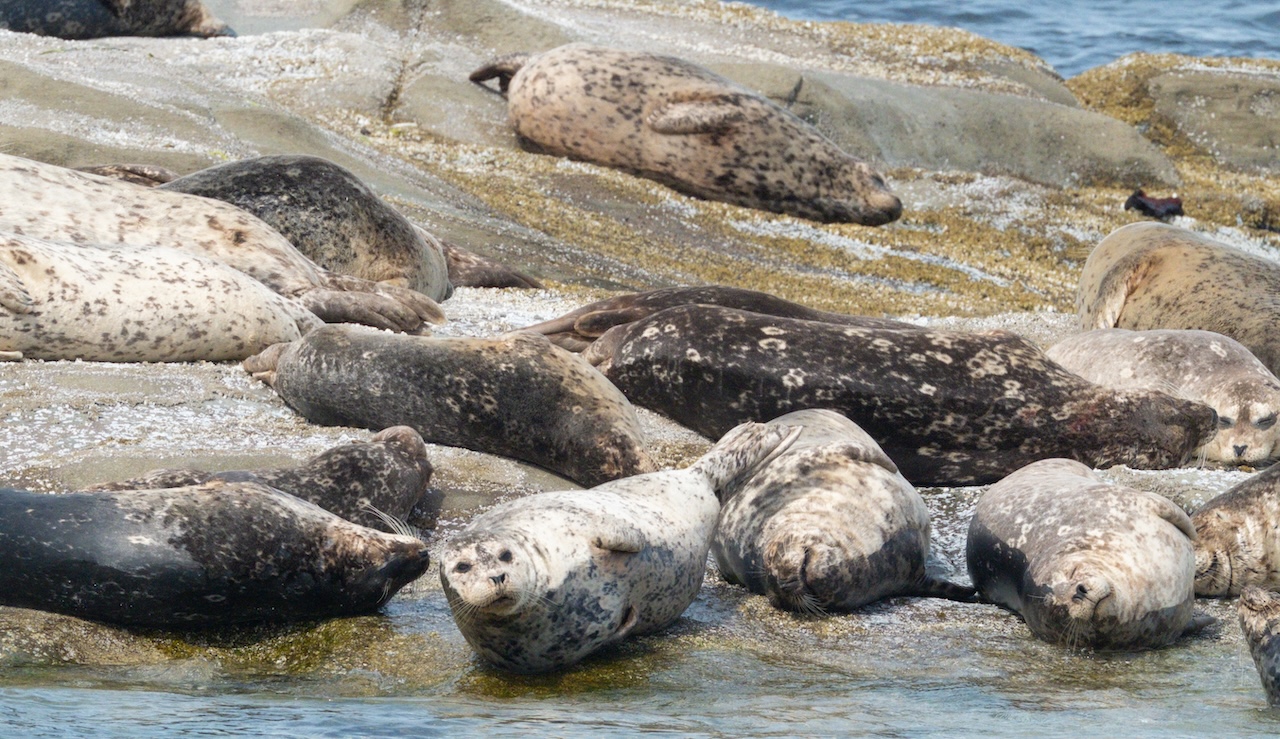
2. They are generalist predators
Harbour seals will eat what’s readily available and easiest to catch. Fish like herring and hake make up most of their diet, but they will also eat cephalopods and crustaceans. They need to eat about 2 kilograms of food a day.
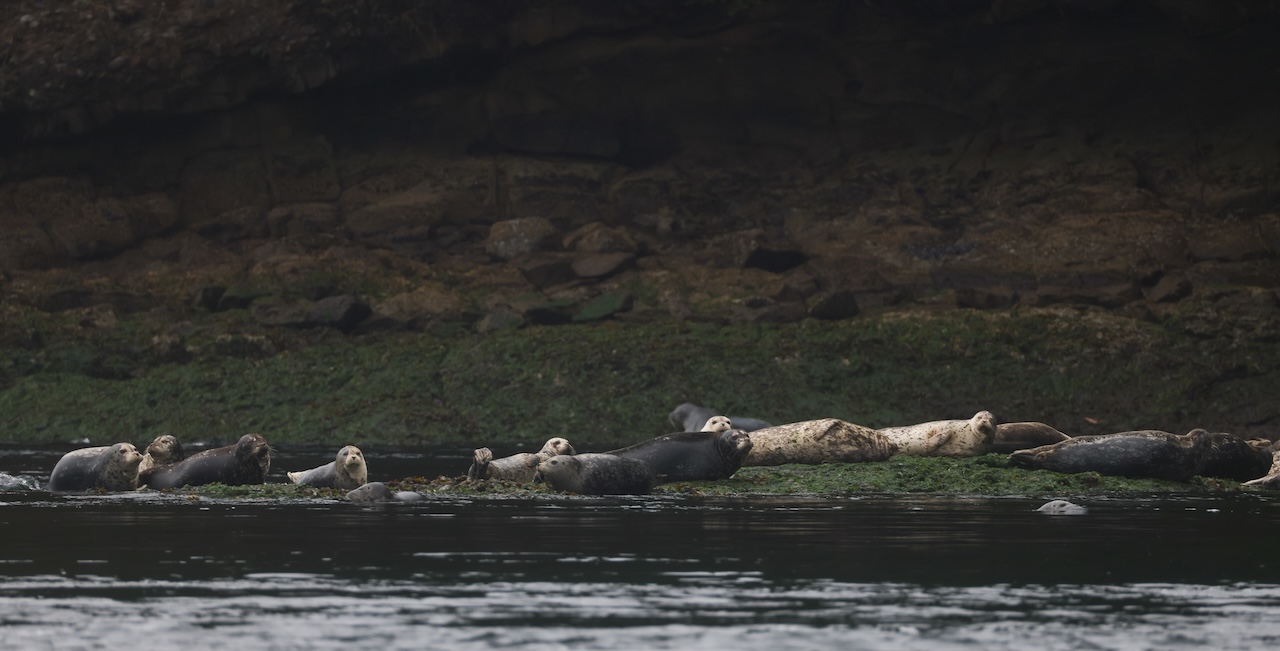
3. They can take naps underwater
It’s not necessary for harbour seals to haul-out on land to get some sleep. As harbour seals can hold their breath for up to 30 minutes, sometimes they will dive down to a kelp bed and have a quick underwater nap. One theory for why they do this is predator avoidance—while killer whales will search near shore and the water’s surface for seals, a kelp bed at the seafloor provides a hidden haven for the seals to rest.
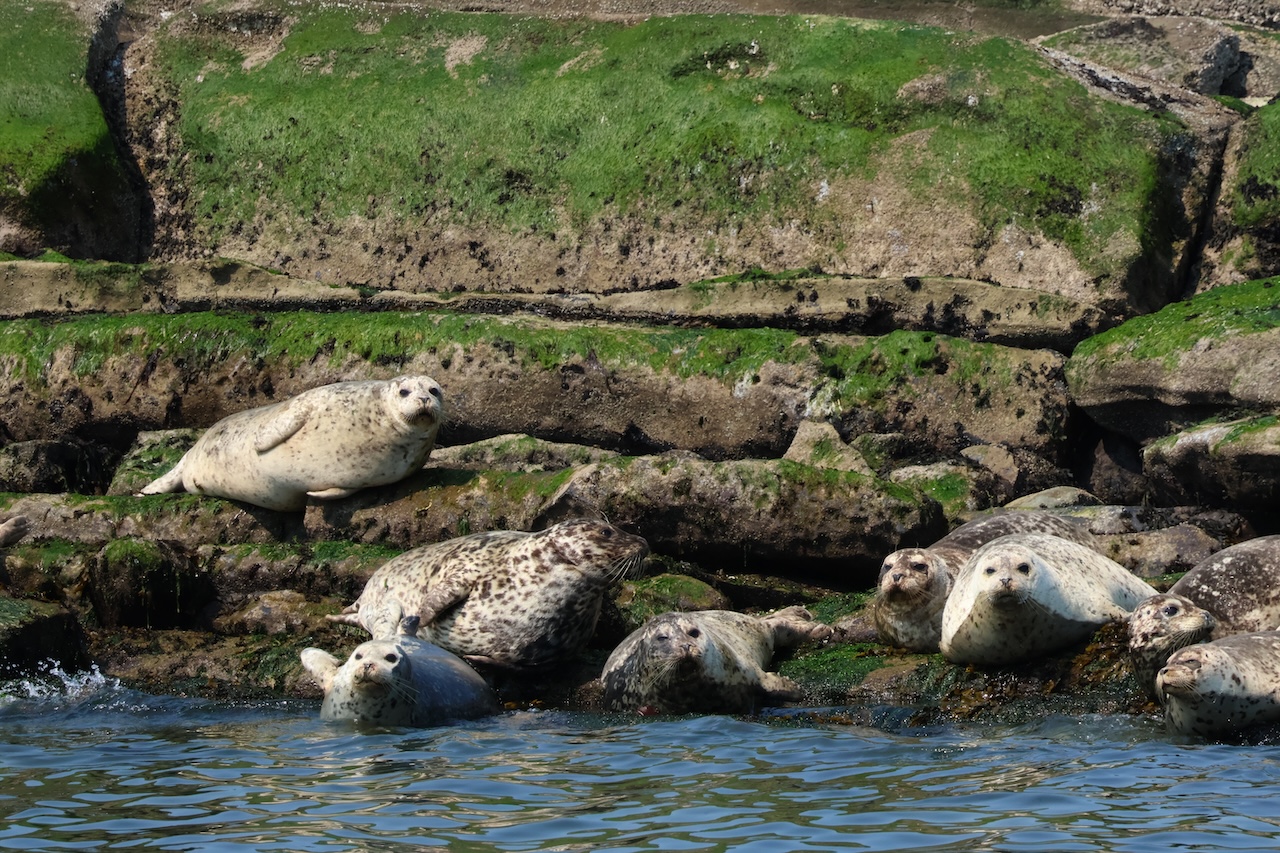
4. They have sensitive whiskers
In murky water with low visibility, harbour seals rely on their whiskers to search for prey. Their whiskers possess sensitive nerve endings that detect vibrations in the water column, so even if a harbour seal cannot visually see the fish, they can still locate them by following the vibrations.
5. Their population is thriving today
The harbour seal population is thriving in the Salish Sea, with some estimates suggesting over 100,000 harbour seals call this region their home, with the highest density of seals residing in the Strait of Georgia. This wasn’t always the case, however—in the 20th century, harbour seals were culled for being a nuisance to fishermen. By some estimates, before their protection in 1970, the harbour seal population was as low as 10,000.
It was uncommon to see Bigg’s killer whales in this area back then, likely due to the lack of harbour seals. Today, we’re lucky to have a healthy harbour seal population, as that means we have a thriving Bigg’s killer whale population.